Wednesday, January 19, 2022

Who are We Kidding?


Two weeks ago at my 10 year-old’s basketball game the referee paused the game to talk to the visiting parents. Since I was working the scoreboard across the gym floor I couldn’t hear the conversation. After the game the ref spoke to the visiting coaches. I overheard him explaining that their fan said derogatory remarks to one of the home team players, and the ref put a stop to the jeers because it “just wasn’t right.” Within the same week I heard about a local school board meeting where a 15 year-old boy spoke about how he felt more comfortable for their school district to continue the mask mandate due to the Omicron wave. And a woman at the meeting yelled a horrific, “Shoot him!”

When I heard the second story it felt like I was in that meeting, watching an impressionable boy being verbally assaulted by an adult, with demonizing, much more than insulting, words. And if I felt attacked merely hearing the story, how did he feel? His parents? For the 5th grader at my son’s game the comment’s threat was at a much lesser level, but still…all I can think is: Why don’t parents have a filter, especially when it comes to kids?

I’m no angel…I’ve been to my share of youth sports events. I’ve winced at the seeming cheaters calling bad line shots on the tennis court. I’ve bristled along the soccer field when I’ve felt kids are too physical and should be called on it. But to verbally attack a child?

Are adults so emboldened that they can freely shout insults at kids who are still developing, still forming their own sense of self-worth? Still sizing up the world around them and figuring out how they fit in? Still learning how to treat other humans? What happened to these adults in their lives to justify these actions?

I’ll never forget the indoor baseball tournament my oldest son played in years ago. My son hit a triple and was obviously psyched. He was on a high until the next inning when he was perched on the rubber pitcher’s mound. He walked a kid and looked visibly upset and frustrated. Some mother from the other team shouted a gravelly, “Good! You deserve it, pitcher! We got you!” Even though I despise conflict, I stood up in the bleachers and said, “That’s enough! That’s my son!” and in my head I thought—aren’t these all our kids?!?!

On the flipside of these nasty remarks, I’ve seen the power in community parenting, where like-minded, good-hearted people have looked out for each other’s children, helping to raise caring, confident, and thoughtful individuals. These parents with perspective, oftentimes coaches, have these kids’ heads and hearts in the right place. If you have these adults in your circle, thank them. Appreciate them. Make sure your kids express their gratitude towards them. Because it does take a village to raise kids. 

I don’t know if the threatening woman at the school board meeting will be arrested for her terroristic threats against a minor, but such behavior does warrant us all to be mindful of the effects we adults have on children.

Wednesday, January 12, 2022

Stuck in the Middle?


Even though I rarely eat meat, I sometimes get a hankering for a juicy Italian hoagie. Or I think about a muffuletta in New Orleans, (I LOVE olives). Or one of my favorite sandwiches ever-- fresh mozzarella and prosciutto from Fiore’s in Hoboken, NJ. Now I even crave a regular on my home lunch rotational menu, falafel topped with cucumber salad on a toasted baguette. The insides make your mouth pop with flavor, excitement, and nourishment.

Just like a sandwich, life’s best times are smack in the middle. Think of the many layers, the different elements. I always felt a certain safety being wedged in between, cushioned by whatever end posts existed. As the second child of 3, I actually enjoyed my spot in the sibling lineup. Even all of those Jan Brady middle child syndrome descriptions never felt real. I grew up and currently live in the keystone state, am in my upper 40s, and have a part-time job—I could be considered a “middle pro.” Lately, though, at a time when life should be its clearest, it seems less certain and fulfilling. 

So lately, do you feel yourself being stuck? Here I am wondering if the middle is more muddle.

No longer do we have the hopeful youth of childhood and even young parenthood. Now we face inevitable responsibilities and realities including exhausting spurts of self-doubt, worry, and caretaking with consequences. Not dealing with minor decisions of which diaper brand, it’s which antidepressant to prescribe and what effect would that have on my kid. Will the older people in my life survive Covid and other possible ailments? And it’s not just those above and below us…it’s also looking in the mirror—both externally and internally. Yes, I need another skin biopsy. Yes, my hair is thinning. Yes, I still need to decide how I want to live the rest of my life.

Are we being squeezed too much in this stage of life—like Dagwood forcing one of those over-the-top sandwiches into his mouth? Somehow he always fits it all. And I suppose, somehow so do we. That’s not to say at times we can feel bloat or nausea.

In April ’21 Adam Grant, the organizational psychologist, published an article about the “middle child of mental health”—languishing-- during the pandemic. He described it as “joyless” and “aimless.” Is this a natural slice of middle age? To overcome these sluggish feelings, perhaps focusing on mindfulness, healthy foods, time in nature, and relationships would help. Typical with many Januarys, I, too am re-centering priorities, making the time to reflect, and cultivating
healthy habits. I dusted off my journal. I tried making buffalo cauliflower in the new air fryer. I’m carving out more time to play tennis with friends.


As I think about it, the daily rhythm of this age has its own patterns. As we consciously live and flow with how days pass, take note of what makes life juicy and nourishing for you. Add more of those layers and take out the wilted ones. As I’ve been writing this post, the catchy beat of “Stuck in the Middle (With You)” by Stealers Wheel has been playing on a mental loop. According to research, the band was surprised by the single’s chart success. Maybe those middle marvels in our lives, when we feel stuck, can surprise us, too.  


The Adam Grant article https://www.nytimes.com/2021/04/19/well/mind/covid-mental-health-languishing.html

Thursday, May 6, 2021

The Accidental Vegan

I love to cook. I used to watch the Food Network while my babies napped. I’d read cookbooks while eating breakfast. I felt like a creative artist at the stove or an explorer if I found a recipe that turned out extra special. I felt connected to especially my Grandmom when we’d cook together—I can’t smell fresh parsley without thinking of her.

So what happens when two of your children decide they’re vegan and you feel slapped and stunted in the kitchen—family recipes suddenly vaporized…(never again will they eat meatballs? Buttery split second cookies? Pizzelles?) Almost two years ago my oldest decided to follow a vegan lifestyle—and that includes honey, butter, eggs, and dairy. When my son followed suit I prayed that it would just be a fad, and soon I’d be making caramel French toast with a side of bacon again for holidays.

What do you do during mid-life if suddenly you HAVE to make a lifestyle change you don’t want to?

Believe me, I’ve heard from friends like—“Just make them eat steak. Serve it every day, and they’ll eat if they’re hungry.” Or “Tell them they can be vegan when they move out of the house.” I don’t know if it’s my parenting or what—but when it comes to eating, I feel like I can’t force food down the throats of strong-willed almost-adults. So what did I do?

We saw a local nutritionist. I consulted my cousin who has her masters in nutrition. I devoured countless texts to learn more. I embraced the change and challenge, and would even cheer, “Plant power!” when I served a yummy veggie soup. They would roll their eyes and gratefully slurp from their bowls. I learned that a plant-based diet is healthy. It’s MUCH better for the environment. And as I was cooking for them, (as well as for my younger two who don’t like vegetables), I started gravitating towards the plant options. And I started feeling healthier—with more energy, better sleep, and less bloat. Maybe there’s a reason Venus Williams is a vegan, I thought when I’d step on the tennis court.

Admittedly, I’m not a vegan. But I now put oat milk in my coffee and rarely eat meat. I’m more conscious of what my family consumes. I don’t cook bacon anymore—even my youngest has sworn off pork because he loves pigs. Every meal has tons of vegetables, nuts, beans, and fruit. So I know we all are eating better.

But here’s the kicker—this is what I learned about adapting to change that I did not want. It’s difficult, and at some moments it’s been emotional—from feeling like I lost an important part of my traditions and what’s core to who I am, to feeling frustrated that I have to make essentially two meals every night, to exasperation wondering if the effort is worth it. I know that even me, someone who used to make some damn delicious foods, can evolve. And why? Because of the love for my kids. For them to know I support them. To encourage a healthy lifestyle for this family. And if I can make these changes regarding an important part of daily living—eating and cooking—then, truly, it gives me hope for the flexibility of others. We all can adapt in life. I learned that when making the choice to go with the flow, there’s less fight, struggle, and stress.

When one is forced to change, educate yourself as much as possible. Connect with others in similar situations. And focus on the intention of why. Those guideposts will nourish you and give you inspiration to move forward. We’re not all as firmly “planted” in our ways as we may think.


Recommended learning:

The Omnivore’s Dilemma: A Natural History of Four Meals by Michael Pollen

The China Study by T. Colin Campbell

The film “Forks Over Knives”

Follow “avantgardevegan” on Instagram

Friday, March 19, 2021

What is Your Acceptance Rate?


Like many parents of high school teenagers the inevitable college search hits home. My oldest is a junior, so for Christmas she received the Princeton Review tome that catalogs schools, including brief descriptions and data. One startling statistic is the acceptance rate…especially how low it can be for some schools. Which, during the pre-application process, makes you wonder…am I good enough to get in? What are they looking for? What I’m observing this year as a parent of a 16 year-old—is that this post-high school search should be an evaluation process for these soon-to-be adults: an honest reflection of character, goals, aptitude, drive, and values. I wish all teenagers would go through this important awareness discovery.

What I’ve also seen this year amidst a back-drop of history-making statistics and trends: a divisive nation ripped by racism, threats to our democracy, elected leaders stifling voter access, and still the undercurrent of a global pandemic with opinions, science, and blustery shouts of freedom from masks and mandates…so one cannot avoid the questions of: in life, what do YOU accept? What matters most to you? And how will your values affect relationships and choices?

I fully realize that people have their own perspectives, education, and experiences that color their judgments and decisions…and that a spectrum of beliefs should exist in a diverse country such as ours. But are there some things you just can’t accept?

I know I have personally wrestled with these questions, especially as I’ve seen relationships wither to the point of non-existence. While these losses make me sad, I often think of the alternatives…more stress? Conflict? Toxicity? Abuse?

It’s like we all could have internal personal metrics, similar to college statistics, that define our souls. We might be more flexible on some issues…and then there might be those that are game-stopping, jaw-dropping, where compromise is not an option. For example, what is your acceptance rate of parking in a handicap space without that license plate? Being lied to by a friend? Someone insulting another in your presence? Being cheated on by your spouse? Companies contributing to environmental pollution? Blatant and even non-overt racism?

Some people scoff at the cancel culture mentality sweeping our country. But I wonder if it’s so bad to erase and abandon offensive things and people. Some triggers and actions teetering on the brink of abuse and downright immorality and inhumanity—seem justifiable to reject. Without accountability, how will people, relationships, communities, a nation—mend?

What remains a question is how to heal and move on—both personally and on larger scales. Part of this life journey may not be about what we’re looking for (as in a college), but rather what we see by looking inward. By examining our individual acceptance rates we can then find comfort in knowing one’s true self…which will then translate into actions and interactions with the world. Maybe by thinking about where we stand on issues we can feel grounded in our life decisions. 

Should it be “rejection rates” instead?

Friday, February 19, 2021

Shrinky but not Dinky

This winter the many snow days have inspired me to shun the cold and stay indoors, often baking something to warm our bellies and spirits. Yesterday I made chocolate chip cookies. The day before? Brownies. When I was a kid one of my favorite snow day activities was also turning on the oven and making Shrinky Dinks. I remember the thrill of pressing my nose to the oven glass door and watching the magic as the colored-in black outlines would flap up in a wave and then emerge as smaller versions of themselves…hardened with their colors brighter.

I couldn’t help but think of this iconic 1980s craft as we experience this pandemic, or pan-damn-ic, as I like to say. Over these past 11 months my world has become smaller. Our social interactions have become limited. We have reduced the chances of contracting and spreading the virus by strategic decisions—minimizing our activities and exposure. And while we coasted for a good while—with winter and the latest wave of snow, ice, and frigid temps—our bubble continues to shrink. The cabin fever in this house practically has its own scent it’s so palpable.

A month ago when my youngest, Scottie, tested positive for Covid I felt the walls closing in—that the extremes we’ve taken with being virus cautious were taken to yet another level to protect others. The anxiety, worry, and isolation took its mental and emotional toll. Luckily we got through with the rest remaining negative and Scottie’s symptoms mild.

But I kept feeling a suffocating, surrounding energy of getting smaller…maybe my shoulders started hunching? My patience getting limited? Or I noticed my kids’ friendship circles tightening?

Then at one point when reflecting—like the plastic Shrinky Dinks after their 3 minute oven stint becoming brighter and sturdier—I realized that somehow my values and priorities have magnified and solidified.

When forced to focus under stress, what values and priorities emerge?

I recently read the 2016 best-selling memoir When Breath Becomes Air by Paul Kalanithi, a 36 year-old neurosurgeon. Confronted with his own mortality he ponders a number of life questions. One nugget I took away? When stripped of the many causes of noise and static that can often derail dreams and suck up time, what do you prioritize and value, and how do you live with that purpose? Not just go through the motions that many of us do…but consciously make decisions and LIVE.

While I don’t wish illness and the hardships this virus has caused for hundreds of thousands (in this country alone), I wonder if the universe caused this uncomfortable pause for some good to be realized. I do suggest if allowed that space, reflect how you have changed, and maybe in some ways-- for the better. We’ve all been under pressure—in the pandemic oven like those plastic Shrinky Dinks—and maybe the lessons learned in your smaller worlds will help you emerge with a clearer sense of what’s most important, that values only solidified, and your life will end up brighter and more colorful.


“The tricky thing about terminal illness (and life, probably) is your values are constantly changing. You try to figure out what matters to you and then you keep figuring it out.”

“I began to realize that coming face to face with my own mortality, in a sense, had changed nothing and everything.”

--Paul Kalanithi, When Breath Becomes Air

Wednesday, February 17, 2021

Best in Show?

 
A month ago one of my kids had an English assignment—change simple descriptive sentences in a way that you show, not tell. For example, “The old house needed repairs” could be adapted to, “I walked through the ripped screen door and then tripped on the broken tiles in the musty entryway.” Showing and not telling is a simple lesson to grip the reader more creatively, to make writing more memorable. Just think about the power of being more vivid and action-oriented. Remember a preschool kids’ joy during show and tell days? I do--six years ago my son, Scottie, told his class about our new puppy, but how much more exciting was it when I brought fluffy 15 week-old Olive for him to show his friends?

As a mom of four I frequently feel like my voice is ignored, especially as the kids get older. And if I raise my voice it sounds like I’m upset, or I’m nagging, or I’m preaching—and of course they tune me out. Even with the many “I love yous” I wonder if the kids actually hear me. Do they feel the love?

Which got me to thinking…

What if I did less telling and more showing—would I be more impactful? Would we all?

I’m sure you can think of the relative or friend who started to sound empty with their echo-like refrains—without backed-up actions—and maybe you started to ignore them and take them less seriously. Or their credibility faltered. Or their flimsy praises and promises became that in your mind—and you started gravitating towards people whose actions spoke louder than words. How much more real and valued those relationships feel.

But it’s not just about expressing love and maintaining relationships.

During this pandemic I’ve found it difficult to motivate my kids to be active. I worry about the time spent binge-watching shows, the endless rounds of Rocket League, and too much Minecraft. I am no screenless saint, but lately I’ve been trying to motivate myself to set a good example. How can I tell them to do something if I’m wasting away my days? So internally I made a choice: I’d show them and make more effort. By exercising every day, reducing my alcohol intake, taking a class, and even starting to write again…will I show my kids enough that they see my actions as examples that will inspire them? I’m not sure. I can only hope that they will be influenced in a positive way.

What I do realize—as most of us may—is that people do watch our behaviors as proof. Even though I preach that “words matter,” I am thinking that my parenting may shift to a “best in show” mode…that I will do less telling, and instead, figure out actions that will mean more. If anything, we all can reflect and put our own lives through that English homework assignment…and see if showing vs. telling will be more powerful and memorable.

Friday, January 8, 2021

Ignorance is Bliss-phemous


Turn the other cheek.

Rise above.

When they go low, we go high.

Be the bigger person.

Let it be.

It all comes out in the wash.

We all have heard plenty of platitudes to get us through life’s conflicts, disappointments, and hurt. I’ve repeated similar mantras in my own personal life. With yoga breathing, talking with friends, a ton of journal writing and self-reflection, I’ve taken the high road versus being vocal because I’ve thought—what’s the point? People aren’t going to change. I can shift my thinking, my perspective, and my behavior. Focus on what I can control.

But is silence the best treatment?

I’m sure many of us have been on the receiving end of the silent treatment—and what does that actually do? Let anger fester? Not heal? How do you feel when you stay quiet and don’t vocalize your feelings? Is that always better? Hillary Clinton said, “To remain silent is to be complicit.” In my personal life I’m still dealing with those decisions of not being more vocal, but how does this same idea apply to the entire country? To a government?

Can our democratic government choose to ignore, to just let things pass, when white privileged MAGA terrorists attacked the Capitol building, incited by the 45th President of the United States because they refused the outcome of the November election? When other elected leaders added fuel to this aggressive attack? By ignoring the obvious actors—and the whys—do people think that normalcy will just naturally happen once Biden and Harris are inaugurated? That this horrific nightmare of the last 4 years will just become a 4-line paragraph in US history books for our grandchildren to read? I’m not convinced.

I have felt many emotions and thoughts today as I digest not only how our democracy was threatened, but also by reading and watching reactions of our elected leaders—along with people in my circles and community. And while I have been impressed with some, shared similar sentiments with friends, felt dubious about some politicians’ earnestness, I have also been disappointed by the ignorance of others. The choosing to overlook what’s happening because maybe it’s easier? More peaceful? Is this a conscious choice to ignore? I would like to think that most people admit that so much was wrong about the DC events of January 6th…Trump, social media, false propaganda, the lack of police protection, the glaring racial injustice, the horror and reality of the noose and Confederate flags…

What I do know for sure is that if our current elected leaders choose to ignore the violence trying to subvert our democratic process and do not invoke the 25th Amendment and not impeach Trump—that sends a powerful and scary message to our kids, to extremist groups, to voters, to future presidents, and to the rest of the world. Ignorance is NOT bliss. It’s blasphemous.

Wednesday, May 1, 2019

Do You See Joy and Happiness?


The TV show Wheel of Fortune reminds me of my Baba. This was back when Vanna White actually turned the letter “windows.” I’d sit next to my grandmother and watch the contestants choose their prizes in that dreamy merry-go-round, (before they played solely for cash). Pat Sajak’s smarmy voice bantered with contestants, and stoic Baba would sit on the couch, seriously looking at the clues, only uttering a sound if she knew the phrase.

So last week I had to laugh because I don’t think of Wheel of Fortune anymore. And one of my dear friends texted me that she watched it and couldn’t believe that none of the contestants knew the phrase—and she did. It was “Happy and Joyful.” Which made me smile because 1) memories of my Baba came flooding back, and 2) anyone who knows my friend wouldn’t be surprised that she knew it. Because she embodies true grace, eternal optimism, and spreads love and generosity throughout our community. I thought to myself, of course she saw the answer. Because she’s always looking for the happiness and joy in all situations.

During this hectic time of spring, how do you look for happiness and joy?

With Mother’s Day approaching I’m always reflective, my brain buzzing about the precious bonds with each of my kids and dog. And since April and May spring a predictable cluster-F of activity, I know I need to step back and breathe. And appreciate the fleeting moments of love and awe.

On Sunday I had a free 60-minute pocket when I went outside to start my overdue weeding. My 5th grade son offered to help, so we quickly got busy digging up spikey weeds and dandelions. During the gardening he exclaimed with each worm found. At the fattest, the skinniest, the longest, the baby ones... Since he is my resident fisherman, I suggested that he save the worms for bait, and he started collecting them. That night as the small container sat on my kitchen counter, I added some water, and he warned me, “Mom, they’ll drown.”

The next morning I was shocked that 4 worms escaped, and I felt sad seeing them dried up, a brave effort to save themselves. In true mom protective fashion I wanted to save my son’s disappointment. So in the drizzle at 6 AM I ran outside to scoop up more dirt, transfer the still living worms out of the too wet container, and salvaged his bait farm.

Of course he noticed the bigger container when he sat down for breakfast. He smiled when he told me the expected “I told you so.” And then he gave me a big hug for trying to save the rest of his worms. And I thought to myself—oh, the dirty work of maternal love, rescuing those squiggly creatures for him.

Just like my friend who solved the puzzle, I saw the joy and happiness. Who knew it would be that sliver of time weeding with my kid and seeing his amazement with each treasured worm? And laughing at myself, outside in the light rain in my bathrobe and slippers just to make him happy, saving of all things, worms? If we all seek the sunshine, even during our busy, dizzy days, there’s pure joy and fulfillment in that. My Baba is looking down from heaven at our own backyard Real of Fortune.


“Heaven’s where you find it…standing right there in front of you.” Little Feat

Wednesday, April 10, 2019

3 Ties For Strength?


There’s a reason for Velcro sneakers, even though I always considered them a little tacky. Small kids battle with tying their shoes. Heck, lately I’ve been reminding all four kids to tie their overpriced sneakers and Sperrys.

I remember feeling relief when an after school teacher taught my youngest how to tie his shoes at age 5. But I don’t know what’s happened to his skills. Now his laces look mangled, and his shoes are deteriorating, not looking supportive. He doesn’t care about loose laces, and I look at his weary shoes and think—it’s so easy: just take the time to simply tie them well. Before school I’ve been tightly retying them with a solid double knot because I fear he will fall and get hurt.

Made me think about the strength—and weakness--of ties in relationships.

In the powerfully written and moving saga A Little Life by Hanya Yanagihara four college roommates work through the changing landscape of relationships, careers, and self-awareness over the span of 30 years. One character has a specifically harrowing nightmare of a past. Yet the author cleverly weaves the dark story line with glimmers of love, hope, and life insights. One in particular stood out to me. Yanagihara describes marriage…and the notion that successful relationships need 3 strong reasons/virtues why you are with your partner. If you have 4 binding ties to each other you’re considered lucky.

This idea transcends marriages…to friendships, workplaces, family relationships…

Do you think about the 3 reasons you are bonded/connected to a relationship? And what happens when those ties fray?

I’m reading Daniel Goleman’s book A Force for Good about the Dalai Lama. Through anecdotes, quotations, and research the narrative covers global ideas, problems, and solutions—all stressing compassion as the necessary antidote to ubiquitous evils. When Goleman asks the Dalai Lama about whether he has hope for the Chinese and a solution or compromise for Tibet, the Dalai Lama differentiates the Chinese from the Communist Party. He explains it’s the Communist Party’s need for power that stands in the way. “The Communists have to use lots of censorship, which is actually a sign of their weakness—it shows their fear, that they have something to hide.” He advocates complete transparency, which is the basis of trust.

Which made me ponder…yes, when relationships wither and my stomach feels in knots about particular instances, the distilled, true essence missing is trust. And usually what causes that deterioration? A build-up of lies and the withholding of information.

So is trust the first, most important knot? What works for you?

If my son’s shoes could withstand a triple tie I would do that…because like the novel suggests—having 3 firm knots bind and create a solid foundation. And I suggest for the first, secure a tight one that you can trust to keep it together. Any others serve as bonuses to strengthen and support. Lace up your life with truth and you will step forward into a healthy space where goodness abounds.

Friday, March 29, 2019

Bridges Do Carry Us


Have you ever noticed that sometimes the bridges in songs stand out as the best part? In between the standard chorus/verse structure often artists create a change in tempo or key or craft an especially melodic moment. Do any favorites come to mind?

In the car the other day I heard Huey Lewis and the News’ “The Power of Love” and my heart leapt into an open space during its bridge. Which made me think about other songs’ bridges I love. In Little River Band’s “Cool Change” there’s the whisper of “let me breathe the air.” In Queen’s “Don’t Stop Me Now” it’s “I like it…have a good time, good time…” George Michael’s “Kissing a Fool” has a powerful, intense, emotional surge. While songs’ choruses may be the easily identifiable moment that we repeat, often these bridges offer a transition in the melody—allowing a break, perhaps some depth, some contrast, or a surprise.

Made me think—in life do we look for our bridges? Do we acknowledge and appreciate them for what they are? Or are we lost feeling in limbo?

We all go through transitions in life. Our present is ever-changing. It’s noticing that bridge—the supports-- the people who will help, the activities that will nurture, the loosening of the grip of what was to embracing what will be. Sometimes the bridges connecting us to a familiar past and the uncertain future can feel like an in between state, a time of anxiety and shakiness.

I witness this connecting time in life with my two older kids stretching themselves out of childhood and into young adulthood. I see it with friends who have moved geographically and are transitioning into their new community. I see it with kids when they’re home for the first time from college. I have observed friends in that uneasy time after losing a loved one, handling a shocking diagnosis, or going through a revolutionary transition. And obviously I, too know when my life sits in more of a gray area. Sometimes there’s a breakdown. Or a vibrant energy of change emerges. I can feel those times of inner growth and sense when my role is morphing.

I have always been fascinated by literal bridges—taking many travel photos of them because of their timeless aesthetic and majesty. Their implied strength. Their importance. Knowing that they have supported countless others in getting people from here to there.

So I suggest looking for these bridges in your life. And honor them. Embrace them. Give thanks knowing full well that their purpose is to take you to another space. We are constantly evolving in life, moving forward. We need to rely and love these nurturing elements that give us foundation and security.

Whether it’s noticing what’s underfoot literally or figuratively or looking for those especially lifting and meaningful moments in songs, give gratitude that they exist and welcome the view/space. Know you are bolstered—and allow that support to carry you forward. Who knows? Your bridges may be your favorite parts in life.


Barry Manilow’s bridge in “Weekend in New England”: I feel the change coming. I feel the wind blow. I feel brave and daring…

Friday, March 15, 2019

How Do You Get That Bounce “Bawk”?


While I love the “spring forward” moment for many reasons—more daylight, the promise of warmer weather-- undoubtedly that one-hour difference causes disruption in our household. Even this morning I told my youngest that next week he’ll be back to his old sleep routine and not wake up so early, (and hopefully allow me to drink my coffee in quiet). He just needs to adjust, like we all do, with the seasons transitioning.

Yesterday at the hair salon I mindlessly flipped through Entertainment Weekly and was shocked to see seasoned Hollywood actors with their 1980/90s movie costars. Some look absolutely amazing as they’ve transitioned to middle age—they’re no spring chickens. Julia Roberts at 51? Stunning. Cameron Diaz at 46? Glowing. Dermot Mulroney? Dashingly handsome at 55.

Granted, I know these stars have their crews of personal trainers, makeup artists, chefs, and someone adjusting the light angles for flattering photographs, but still…

For those of us who are not spring chickens…how do we put ourselves in our best light? How do we adjust?

Charles Darwin came up with the idea of phototropism…that a growing shoot of grass always bends towards the light. With many plants in my house I always marvel at the phenomenon of watching them lean eagerly towards the window—and we humans are no different. We flourish with positive energy. Think about that teacher, coach, boss, or friend who believed in the best in you versus the one who cut you down or set limiting expectations.

Maybe that’s simply the secret…we just need to focus on where we feel our best, where we shine. Focus less on our weaknesses, stop obsessing about fixing people or things, and ignore people who exclude and make us feel bad. Instead think about not just highlighting our strengths, but how to spread that positivity in the community. Don’t get hung up or distracted by personal and life’s weaknesses. Or disappointments.

Along with the natural change of seasons I’m mentally set to lighten the load, take off my ever-present down parka, and lean my face towards the sun and hopefully feel a quicker pop to my step. If you have also felt that winter dullness, work on getting your bounce “bawk” and feel the powerful pull towards the light. Bask in the strengths that fortify you. Surround yourself with uplifting people, watch an old movie that brings warmth to your soul, download some upbeat tunes, or sit in a sunny window. Indeed, it is time to spring forward.

Friday, March 1, 2019

Repeat History-- Yay or Nay?


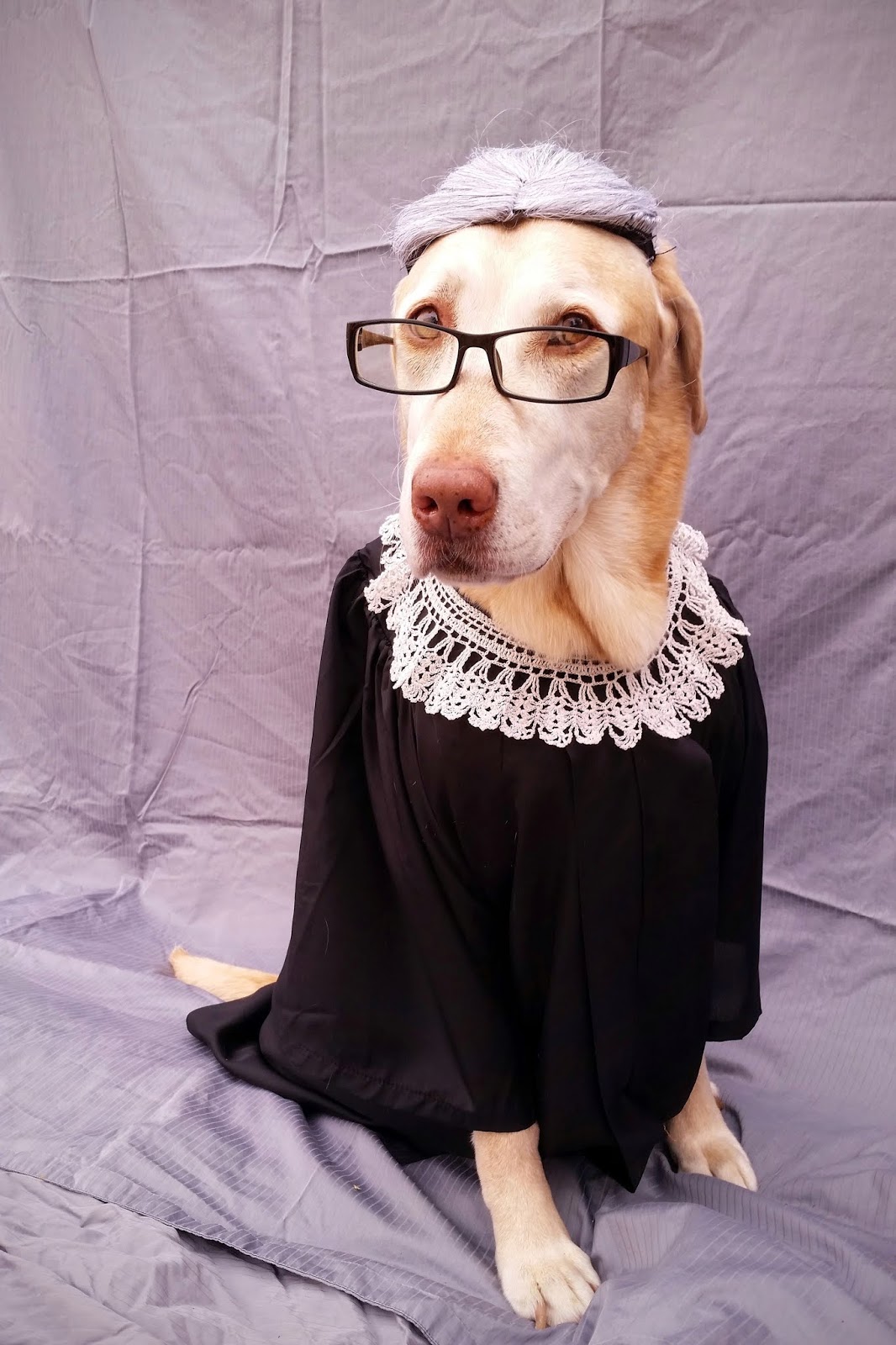
Last weekend I watched the 2018 documentary RBG, and silent tears streamed down my cheeks. I’m not one of those 40something women with Ruth Bader Ginsburg tattoos, and I don’t dress up my dog in a dissent collar. I am embarrassed to say I never followed her legal career in the papers or on tumblr. But something stirred inside me this year. I devoured Gloria Steinem’s book On the Road. Which awakened me to read both a Ginsburg biography and her autobiography.

Learning details of the 1972 women’s movement and the social inequities today surprised me. So many changes—and rather recently. While I was a girl taking tap lessons and watching The Brady Bunch reruns, thousands of women were laying the groundwork not only for a future me. But for my daughter. How did I never hear of these milestones? The movements? The matriarchs of women’s lib?

As a young business consultant I remember a salty team member in her 50s, a computer science engineer, saying with an icy edge, “You,” (interpreted as the greater ‘you’ of women my age), “will never understand or appreciate all that we’ve done for you.” I probably sipped my coffee and nodded, and wondered why she seemed angry. I most likely answered with a respectful response and quickly asked what time we were leaving for our client meeting. In some ways she was right. I didn’t fully understand then. But I’m starting to. Just. Now.

Do we ignore the importance of gender equality’s struggle? Or is it pure ignorance—we don’t know what we simply don’t know?

Raising a daughter and three sons I’m ever-conscious of gender stereotypes and the treatment of the sexes. Wanting to provide opportunities for them all--yes, you can pursue what you love in life, yes, you all need to learn to cook and do your own laundry, yes, you’re all strong, capable beings. But what I’ve learned, and perpetuated even perhaps, is an unconscious silence about the history of gender’s evolution.

And I consider my husband and I enlightened. I graduated from an undergraduate institution that emboldened us all with the equal treatment of genders…and not only did I thrive in that environment, I am fervently proud of it.

So how could I be crying quiet tears? Ginsburg’s story moved me. But it wasn’t just her story that made me cry. It was that her story was part of ALL of our collective stories. And most of us don’t realize it. So we definitely do not give it proper thanks.

The sound of that silence thundered in my brain. The trailblazing activists, the legislators who took a stand, the individuals cracking glass ceilings. What were the whispers of the early suffragists in 1848 or in 1920? I could hear their haunted echoes, yet jumping to present day not many talk about it. I know my children aren’t discussing this important history. I’ve heard women my age laugh about the women’s marches. People have told me, “I could never vote for a female president.” Women defend and doubt misogynistic people in the news. WHY?

As Justice Ginsburg herself has said, “Those who cannot remember the past are condemned to repeat it.” I only hope that more people become conscious of the waves of gender equality warriors and maybe not so silently give thanks to them. We owe them—and our future “them”—much more. Perhaps even a roar. And maybe this is a case for repeating history. Literally out loud. And often.

 “It is not women’s liberation, it is women’s and men’s liberation.”  
Ruth Bader Ginsburg

Friday, February 15, 2019

A Call for More Ball Bearings in Life


“I refuse to flip the numbers,” said one opponent. Her partner agreed. “We never touch the numbers because we always know the score.” This exchange happened at the start of my tennis match a few weeks ago. For those who don’t play, the common practice is to flip a scorecard after every odd game to keep track of the match—so no one disagrees with the final score. Believe me, at my age—and I play with some women decades older—it’s easy to lose track of the score. Reminders help. Which is why my partner and I were surprised.

My response? “I don’t get it. The scorecard is there so everyone agrees. It reduces the possibility of friction.” To which the one very focused woman replied, “If you don’t like friction, then you’re playing the wrong sport.”

Which made me laugh. Because while I love tennis, I don’t like pissing bouts about the score. Or line calls. Or anything that should be obvious. I wondered if they were playing some mental mind game with us…which must have worked because 1.) they won, 2.) I’m still thinking about it.

Those women got under my skin. Why perpetuate senseless friction when it can be easily avoided? Isn’t that wasted, misdirected, negative energy?

I just finished Walter Isaacson’s biography of the genius work and thinking of Leonardo da Vinci. Beyond being fascinated by countless lessons learned from his works and process…one observation stuck out: “What prevents perpetual motion, Leonardo realized, is the inevitable loss of momentum in a system when it rubs against reality. Friction causes energy to be lost and prevents motion from being perpetual.” His discovery of using lubrication and ball bearings to reduce friction was 300 years ahead of his time.

And as many remember from the famed 1985 movie Fletch, Chevy Chase’s character Gordon Liddy said, “Aww, come on guys, it’s so simple maybe you need a refresher course. It’s all ball bearings nowadays.”  

It’s 2019, and I wish there were less friction to allow for constant motion—and progress and peace—whether that means in relationships, business, education, politics, even down to the chronic sibling fights battled in my house. As da Vinci’s creative mind posited, with friction, energy is lost.

What gets in the way? I know some personality types thrive with drama. Maybe that’s it. Some people’s egos create insulated bubbles. Some folks build walls. Some lack the patience and compassion. Instead of being an obstacle…why not focus on using positive actions/thoughts/help, which would only energize others and continue their momentum? Wouldn’t the world be better?

Yes, sometimes friction creates an essential spark, but not all situations need conflict. Isn’t life “flipping” tough enough at times? Just like Chevy Chase’s mechanic Liddy, (novelty teeth optional), we can be pseudo-repairmen and be aware of easy ways to smooth pointless stickiness. I wish that more people would be aware of the energy erosion jam and be more mindful of adding figurative ball bearings to life. It really is “so simple.”

Wednesday, February 6, 2019

Gut-sy Girl Confessions: 5 Steps to a Healthier You


Five years ago I took a keen interest in my physical health…reeling from symptoms of debilitating foot pain, brain fog, hair loss, joint pain, and extreme lethargy. Thankfully a podiatrist (of all specialists!?!) said I probably had an autoimmune issue and advised to get my thyroid checked. That led to a series of doctor visits, ultimately a Hashimotos diagnosis, and a come to Jesus realization that diet affects physical and mental health. So with tears, I gave up gluten and mostly dairy and sugar. I saw a holistic practitioner whom I still see today—and she recommended probiotics and supplements. After 3 months my symptoms went away, and I’ve been a believer ever since. That gut health revolution has put me on a path, (I hope), to long lasting wellness. And I want my friends and family to feel their best…which is why I’m sharing my story.

Yet last year I took the gut focus even farther. I resolved to make a concerted effort to listen to my gut, dig deep into maybe what you would call the bowels of my conscious soul, to make every decision. From friendships, to whether to go out on a cold Friday evening, to seeking work opportunities, to signing up my kids for activities. And the result? It’s been a damn good year.

Which makes me wonder…why go against your gut…EVER?

I wish I knew then what I know now. That there is beauty with getting older and the wisdom associated with it. If we all know more about physical and mental health…and the link to our guts…why don’t more people take care of themselves and improve? Is it denial? Lack of knowledge? Inertia?

Continuing my learning quest I recently read the book Liver Rescue seeking answers to teen acne and kid high blood pressure—with an ever-open eye to Hashis. I discovered even more changes to make. That if we take better care of our livers then many health problems could be fixed: diabetes, gout, acne, autoimmune diseases, to name a few. So in lieu of making drastic changes like buying crates of celery to juice every morning, (and I may get there at some point), I took easy, ahem, digestible, steps. Like drinking a pint of lemon water at the start and end of my day. Eating more apples and less meat.

For these past 5 weeks I've felt the best in seriously I don’t know when. And everyone can make incremental changes…like slicing a lemon, squeezing it into water, and chugging it at least twice a day.

I’m not looking for a pat on the back or smug reactions—my hope is that my kids and those I love and care about take a look inward and:
  1. take time to know yourself, your priorities, and your health
  2. learn as much as you can about the gut and liver
  3. make even small diet changes that will undoubtedly make you feel better
  4. listen to your intuition and make decisions that feel right
  5. be good to yourself
We have a lot of life yet to live. It’s never too late to treat yourself well. Is it coincidence that gut means “well” in German?


Books I recommend if you’re interested in learning more:
Wheat Belly by William Davis
Medical Medium by Anthony William
Hashimoto’s Thyroiditis by Izabella Wentz
A Mind of Your Own by Kelly Brogan, MD
Adrenal Fatigue by James L. Wilson
Sugar Busters by H. Leighton Steward
Animal, Vegetable, Miracle by Barbara Kingsolver
Liver Rescue by Anthony William

Friday, February 1, 2019

Empty is the New Full


I’m ready to spend the rest of winter hibernating under a blanket next to a mug of steaming coffee and a book. With only so much free time…or maybe that’s so little…I resist the lure of indefinite titles of TV shows to binge watch…opting for the quieter option of reading. Since watching Coach Taylor and other memorable characters on Friday Night Lights a few years ago I haven’t been inspired to watch another series…(I welcome your recommendations).

One Netflix show—Marie Kondo’s series about tidying up—has been in the spotlight. Yet I don’t have the desire to sit on my couch while watching someone else purge when I know that my garage, bedroom, and basement need a full-time consultant to help rid my house of joyless clutter.

Last week I talked to my good friend who recently moved into her new home. They sold most of their furniture before crossing 5 states, so her voice echoed while walking through her living room. I suggested taking photos of the open space. To take it in. Enjoy the vast room and possibilities. To savor that freedom to acquire at leisure. Over the course of time and the natural need to have a sofa and other furniture—the house will fill up.

For our wellness we all can concentrate on “clearing house” versus just donating unused things. We can choose mind over matter. Like, literally….choose a clear mind and focus on simplifying thoughts and energy vs. time spent on purging actual objects.

There is value to feeling empty. To be able to breathe deeply. To reflect how you’d like to fill it. If you’re so stuffed…how can anything new fit in? It’s uncomfortable and unhealthy.

From my own perspective I have noticed my personal habits change. From working at an aggressive pace every day and going out nightly as a twentysomething. To having a schedule so full with ink that somehow I got through it all. Thrived on it, actually. To my thirties balancing playdates with constant diaper changes and tossing in a part-time job. To now…how choked I feel if I don’t build in that space. A natural buffer. How stressed I feel when the candle burns on 6 ends. I gravitate towards the pull to just be—reading, writing, spending time outside…

In getting older--do you need more quiet? More space? More free time?

If seeing posts about cleaning out stuff exhausts you—if that isn’t you or your priority—then I suggest looking inward. You can get your fill out of emptying your schedule, clearing your head, saying no to commitments, and crafting time for yourself. Emptiness allows time to breathe, to get hungry, to quietly reflect, and to appreciate the space. By allowing yourself breaks you open yourself up to other ways to feed and fuel your soul. As Coach Taylor cheered with his team on my favorite TV show—“Clear eyes, full hearts, can’t lose.” Free your mind and enjoy the fullness of that emptiness.


Saturday, January 26, 2019

Late Bloomers May Bring Unexpected Joys


Some gardeners look at seed catalogs during the winter, anticipating new plants to become food delicacies to enjoy. I look out at my simple, overgrown weedy garden on this January day and wonder if I’ll ever grow more than one cantaloupe a season. And will it be worth it?

As much as I love gardening—it’s backbreaking work. Sometimes with little rewards. Some plants do better than others. Even last week I was surprised by a tiny indoor spider plant—one that I’ve had for 11 years. It bloomed a delicate flower that lasted a day. For more than a decade this plant never bloomed a flower. What a delightful surprise! All this time…and this week, for a fraction of time, it gave me an unexpected joy.

Last weekend I was talking to two moms, and I had no clue that one has an interest in being a young adult novelist. I say has for a reason, because I believe anyone who has a dream, who feels a calling, can pursue it—no matter when in life they bloom.

Do you feel like a late bloomer? What soulful calling churns in your deepest thoughts? What whispers ideas that excite your imagination?

Those moments crackle in my spine…I get urges to create, to make connections, to produce something new. And when those moments germinate my pulse quickens and physically I feel a lightness and energy: hope intertwined with innovation and joy. In some ways I feel like seeds had been buried deep in some wintry garden of my soul, and who knows when the flower will burst?

I wonder if others feel the same. Like even Vera Wang---I had no idea that she worked as a fashion editor until age 39. Then she opened her boutique and began designing wedding gowns. Or that American painter Grandma Moses, born in 1860, had her first big show in 1940. How impressive that a young-at-heart 78, Moses began painting in earnest.

What has always intrigued me about creativity and art—and that applies to entrepreneurs starting a new company, engineers striking up product ideas, amateur chefs concocting a dish—in ALL areas of life--is that everyone is juiced with the ability to create. That all it takes is a glimmer of an idea, some carved out time to focus on it, and a pure joy of simmering in the creation.

Everyone has a creative spark inside. It may take 11 years to see it surface, like the delicate spider plant flower. It may take decades for a book to sell. It may be even decades before you start. It may be a lifetime of backbreaking work to see any success…but that’s not the point, is it?  If you feel that sensation bubbling, that you just want to start, who knows what will burst forth? Along the way the inner joy will bring you a sense of lightness and purpose. You may even surprise yourself, I’m sure.


Time article about Grandma Moses

Friday, January 18, 2019

Photo Finish? A Real Race to Picture Popularity


Over Thanksgiving my family spent some peaceful time in Cape Cod. On a sunny yet frigid day I drove my boys to a beach to check out the late afternoon sun on the bay. Surprised, we were struck by the impressive beauty of the frozen sea foam creating an Arctic scene. Knowing that my 14 year-old daughter would love taking landscape pictures I called my husband to drive her to the same spot.

My daughter loves taking photos, and I wholeheartedly encourage this passion. Immediately I could sense her excitement—she started clicking, standing on ice, kneeling, trying to capture the best possible angles. Granted, she was wearing Birkenstocks unlike the polar expedition attire I wore. When she lost her sandal somewhere in icy slush she didn’t even tell me…determined to find it. I saw her gloveless hands digging, searching, when I realized what happened. Going after the ideal photo and lost in the moment she did not think about possibly losing the sandal. I told her to get to the car and put on the heat. She needed to defrost. And while the sun set I started poking the frosty surf, muttering under my breath at the moment’s absurdity.

I thought—how far would she go for a photo?

Hello, perspective…recently my newsfeed highlighted an article about senseless deaths from people going much farther than my daughter to snap the enviable pic: a culture of extremes for social media fame. People literally sitting on the edge of skyscrapers for Instagram popularity. Hiking scary cliffs. Taking a selfie with a bear. The adrenaline achieved plus the likes and follower tallies fuel even the average person to take high risks and make questionable decisions.

Now I fully realize that my daughter’s shutterbug quest isn’t the same as posing next to an erupting volcano—but I wonder: how far will people go in potentially harmful situations? And as  parents…do we understand the intense social pressures that stir these extreme choices? And I don’t mean for just photography--sake, I mean in life. For 13 years total I will parent teenagers, (calculating until my youngest will be 19), and merely at the cusp now I wonder if my nerves can hack it. I worry about my kids’ safety. And my fortitude. This when my kids haven’t pushed the limits. Yet.

Researching risky teen behavior I found that the most profound influence is, surprise, their peers. That teen brains are wired to focus on their friends, seek peer rewards, and long to be included. And the brain’s lateral prefrontal cortex, which is responsible for mature self-regulation, develops gradually during adolescence. 

So how far will kids go? How much effort will we make to literally peer into our teens’ own lenses to understand their motivations and decisions? As I continue this journey with the sacred sisterhood of cherished mom friends, I can only hope to glean some insights before our kids—or us—literally snap.

And if you’re wondering what happened to my daughter’s Birkenstock…I determinedly plowed through that Cape Cod Bay slush, and with frozen fingers extracted her sandal.


Photo Extremes article in Fast Company

Teens and Risk Taking article in Psychology Today

Monday, January 14, 2019

Spinning My Own 45


Growing up we had a Fisher Price record player, and I remember being at the age when I was beyond listening to books on records. At Allentown’s Laneco, the equivalent of today’s Target, (food, home goods, even clothes), the music section pulled me every shopping trip. One day my mom told us we could pick out our own record, and I took the task seriously, flipping through the 45s in their paper covers, wanting to make a good first purchase. I ended up choosing Diana Ross’s “Upside Down”—the first of many musical buys in my life.

And here I am…turning 45. Sometimes I relate to those records, constantly spinning. As much as I’ve seen our world turn upside down I hold many steady truths close to my heart. What truths propel you? What keeps you grounded? Inspired? Here’s just a sampling of things I’ve witnessed, internalized, and ponder, especially in the first half of my 40s:
  • Senseless events happen in every community.
  • Kids’ unique glow and their impressionable souls need to be celebrated and encouraged.
  • Our livers harbor too many toxins. We all need to hydrate and eat healthier.
  • Toxicity in all areas of life should be eliminated.
  • Stay true to yourself. And always strive to improve.
  • A democracy should have government representation that truly represents its citizens.
  • Some of society’s “machines” seem too daunting to fix.
  • Every single child needs teachers who have their backs.
  • Surround yourself with people who feel like sunshine.
  • Don’t take wins to your head or losses to your heart.
  • I’ll never tire of reading and loving the power of an amazing book.
  • Finding activities that bring you joy should never tag along with guilt.
  • Moms amaze me for their strength, how much they carry, and all that they do.
  • It’s a tough tightrope of living for today and saving for the future.
  • We cannot grasp the digital effects on our children—they live a different childhood than ours.
  • Time seems to be moving at a faster clip.
  • Mainstream medicine still does not have a handle on autoimmune diseases.
  • Leaders should follow a moral code.
  • The rampant sexual harassment reported over the past year disturbs me.
  • Everyone has a story to tell. They’re worth listening to.
  • I still get awestruck by privilege. That certain people’s paths are instantly easier because of money and connections. I often wonder if they sincerely, humbly are grateful for it.
  • Coordinating trips with friends is nearly impossible because everyone has so much happening. But those relationships and “time off” nourish the soul.
  • I believe in the promise of kids. And I hope they believe in themselves.

As I spin from day to day at the age of 45, I rely more on instincts, often having my emotions turned “inside out” like Diana Ross sings, and I know this much to be true. That even at 45—with the right people around—you can still feel hopeful, young, and inspired. There’s so much life yet to be played! 

Wednesday, January 2, 2019

Seeking Simplicity


Like in my journal where a blank page offers a sense of hope, the clicking over into a new year brings that same sense of optimism and clarity. A sincere taking stock of both the good and frustrating from the last 12 months with a twist of yearning, wide-eyed promise into the next. In some ways the mental page flip of the kitchen calendar reminds me what is most important in life. 

With renewed spirit after the overindulgence of the holidays—the mind/body/house clutter—always returns with a need to simplify. The need to refine. Years ago when I was a business consultant in Boston my favorite manager, Bob, told me that we should be able to relay our overarching plan to the client in haiku form. That the usual consulting-ese often convolutes the purpose of engagements. We should stay focused with a clear objective in everything we do and say. That idea stuck with me.

I just read Stephen King’s memoir On Writing, and he would agree with Bob. He suggests during the first edit that you reduce the writing by 10% and stay focused on the overall theme. That every detail, action, and dialogue should all advance in the sweeping notion of the story’s central idea. 

With too many life distractions how difficult is it to stay focused? Can we all edit 10% of our lives?

I am in awe of successful people who achieve beyond what I have done in my 44 years. Sometimes I wonder if it’s because I wander too much…that multitasking in different directions stands as a feeble, flimsy yet realistic excuse for not doing more. I can justify that of course I haven’t finished my 180,000 page novel; that I’m too busy cleaning up my kitchen five times a day along with everything else that drains my energy. As Seth Meyers and Amy Poehler would say, “Really?!?!”

So in seeking simplicity I took a stab at writing my own haiku:
Striving for simple,
honest, true living
sometimes exhausts me.

Granted, traditional Japanese poets wrote haiku poems inspired by nature, a moment of beauty, or a poignant experience, and mine is none of that…but those 17 syllables encapsulate how I feel. Why does carving out a simpler life take so much work?

In A Whole New Mind author Daniel Pink suggests drawing a five-line self-portrait for a creative spin at looking at the bigger picture. I interpreted the exercise as a way to distill the true essence of who you are. A graphical haiku of sorts. Here’s mine:

As with all new year’s resolutions filled with an expectant hope, my search for simplicity will, I’m sure, veer off-course as life’s mundane consumes my minutes. But I pray that glimpses of filtered, stripped-down priorities make their way into my cluttered mind as reminders to keep it simple. And I suggest that you try the same—pen a poem or draw upon what’s truly essential for you.